 Horse Physiotherapy
 – for a supple back and free movement
Whether back problems, rideability issues, rehab after injury or maintaining performance: physiotherapy helps your horse release tension and blockages and move freely and in rhythm again. I'm an English-speaking therapist and come to your yard.
What is horse physiotherapy?
Physical therapy and movement therapy for your horse – in sport and leisure.
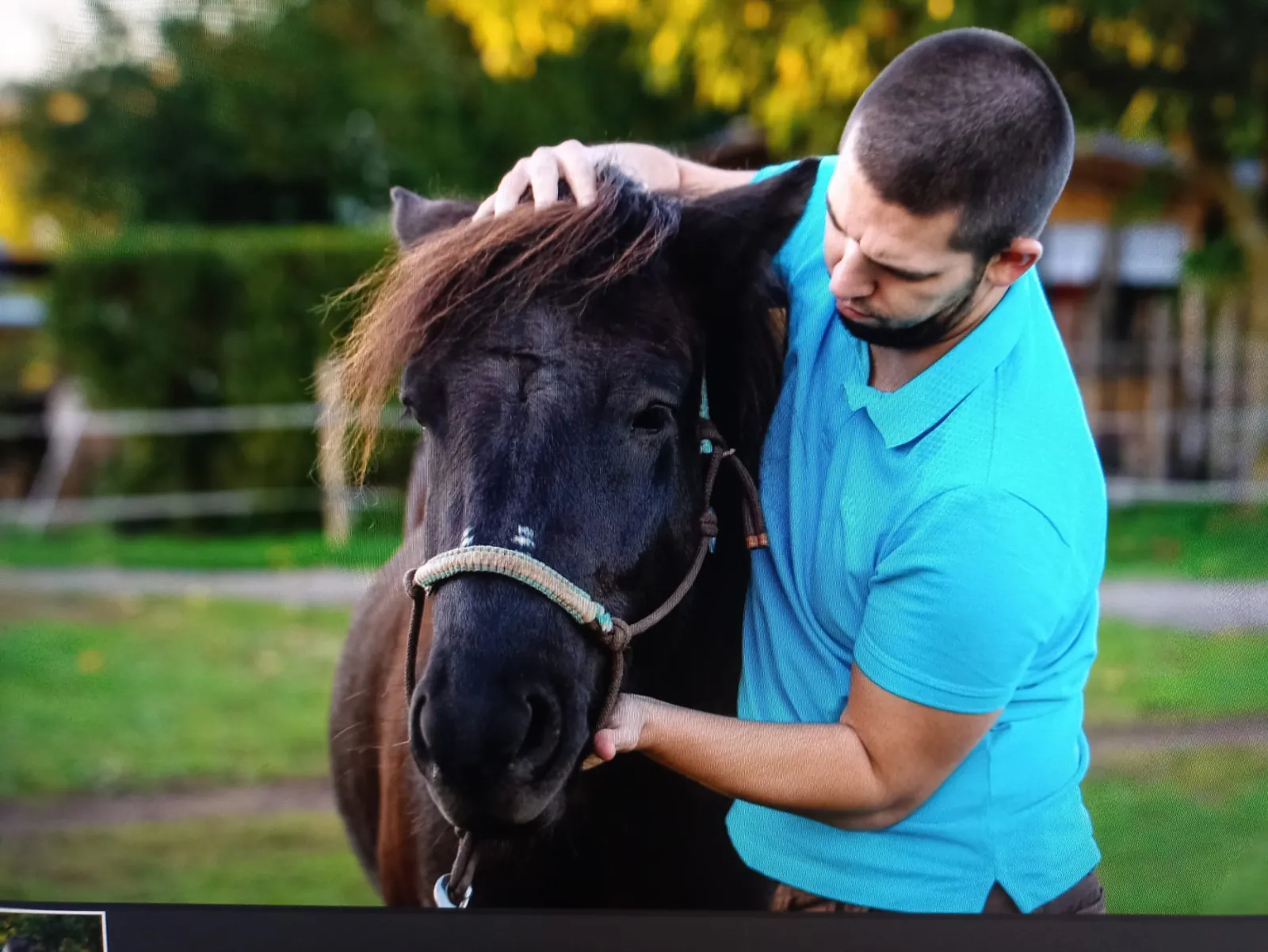
Horse physiotherapy transfers the principles of human physiotherapy to the horse. The aim is to find and release tension and blockages in the musculoskeletal system, to balance the musculature and to restore natural, free movement.
Every serious athlete gets physiotherapeutic support – and your horse deserves the same, whether in competition or leisure. I work holistically: I don't just treat the obvious symptom but look for the cause. Important: physiotherapy does not replace the vet – it complements them, and lameness in particular should always be clarified by a vet first.
Conditions – signs & indications
Many problems first show up „under saddle“ – as a rideability or behaviour issue with an underlying physical cause.
1Back
- Kissing spines, dipped back
- saddle pressure & girthiness
- flinching when groomed/saddled
- a back that no longer swings
2Rideability & gait
- rhythm faults, short striding
- stiffness, crookedness, bending issues
- cross-cantering, flying-change problems
- resistance, bucking, stumbling
3Musculature
- tension & myogeloses
- one-sided build / asymmetry
- muscle loss (atrophy)
- muscle-fibre tears
4Joints, tendons & ligaments
- arthrosis, bone spavin, joint blocks
- tendon & ligament issues
- filled legs, oedema
- chronic issues such as navicular
5Rehab & aftercare
- after operations & injuries
- after falls / paddock accidents
- relieving overstrained structures
- poor wound healing, scars
6Seniors & prevention
- maintaining mobility in old age
- performance & injury prevention
- a regular check for well-being
- balance across the whole body
How a treatment session works
It always starts with a thorough assessment – from which an individual treatment plan is developed.
Assessment at rest & in motion
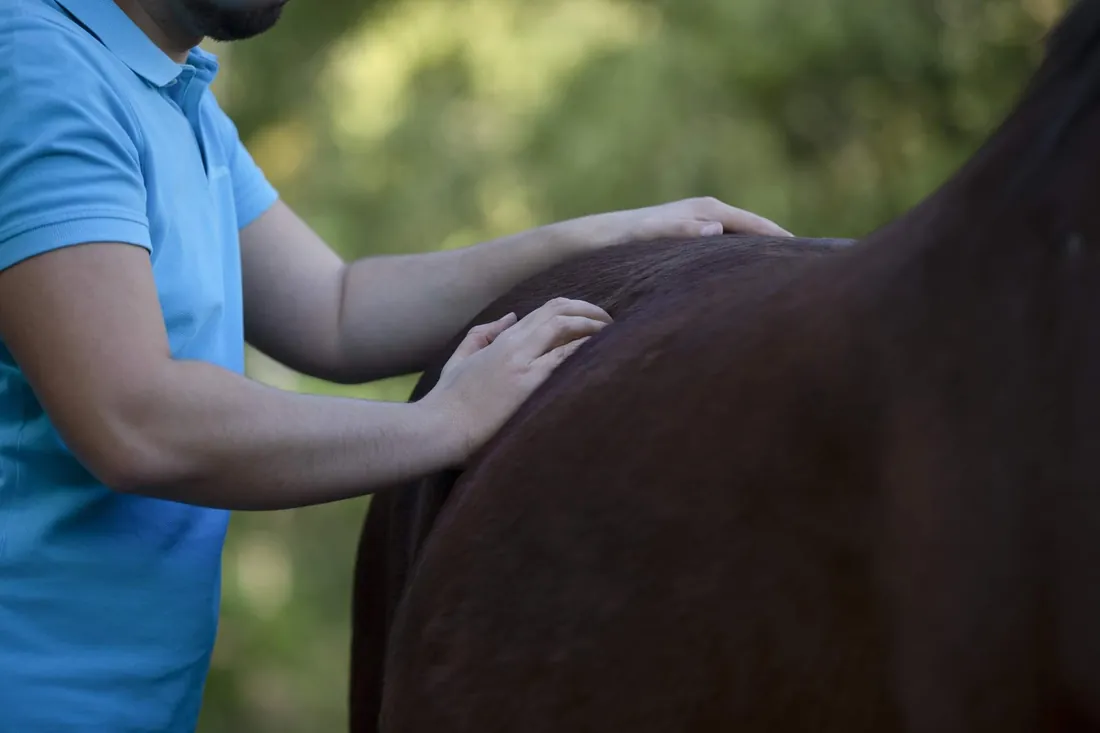
I evaluate posture, musculature and gait and palpate for tension, blockages and painful points.
Massage & fascia techniques
Targeted grips release muscle tension and adhesions, boost circulation and relieve pain.
Manual lymphatic drainage
Gentle techniques help with filled legs, oedema and in rehabilitation after injuries.
Mobilisation & stretching
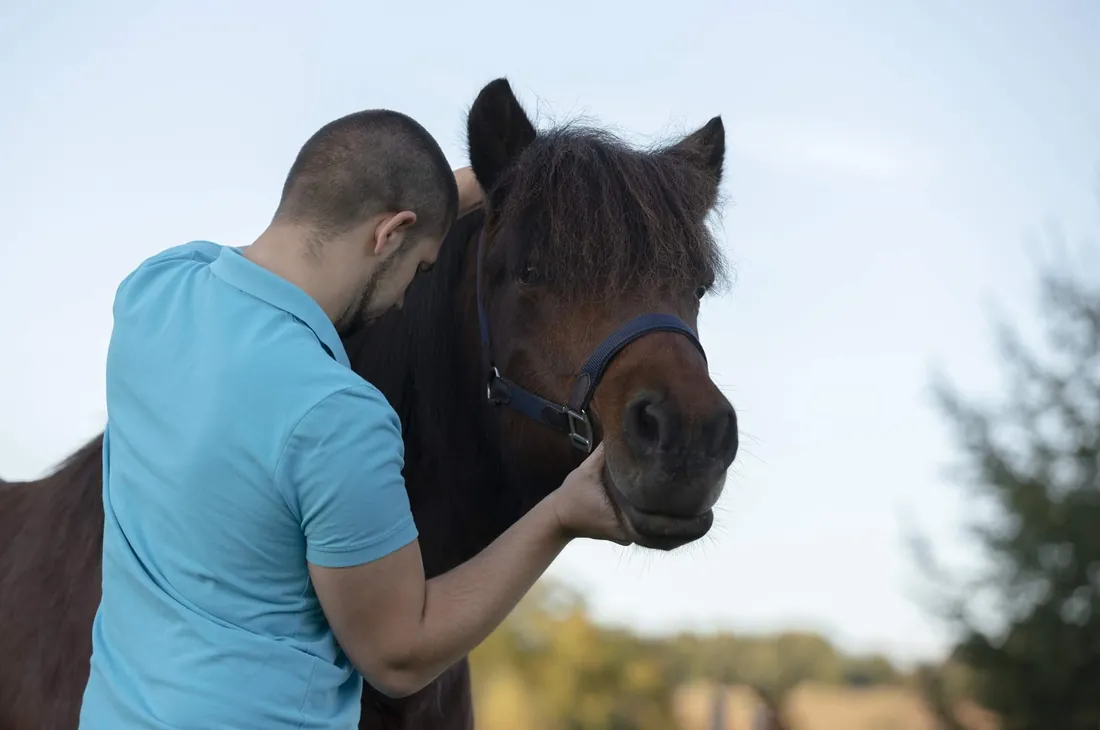
Gentle mobilisation of joints and spine plus targeted stretches for more range of motion.
Active movement therapy
Exercises via groundwork and lunging – for rhythm, straightness, carrying power and targeted muscle building.
Taping, heat & everyday exercises
Kinesio taping, heat applications and simple exercises you can do between sessions.
Sound-wave vibration therapy (Novafon)
With the Novafon one+, a certified medical device, I apply gentle sound waves directly into the tissue. The local vibration can release deep-seated tension, ease pain and help the treatment reach deeper muscle layers.
What physiotherapy achieves
A horse that feels good moves more freely, is more rideable and stays healthy longer.
Movement therapy for horses
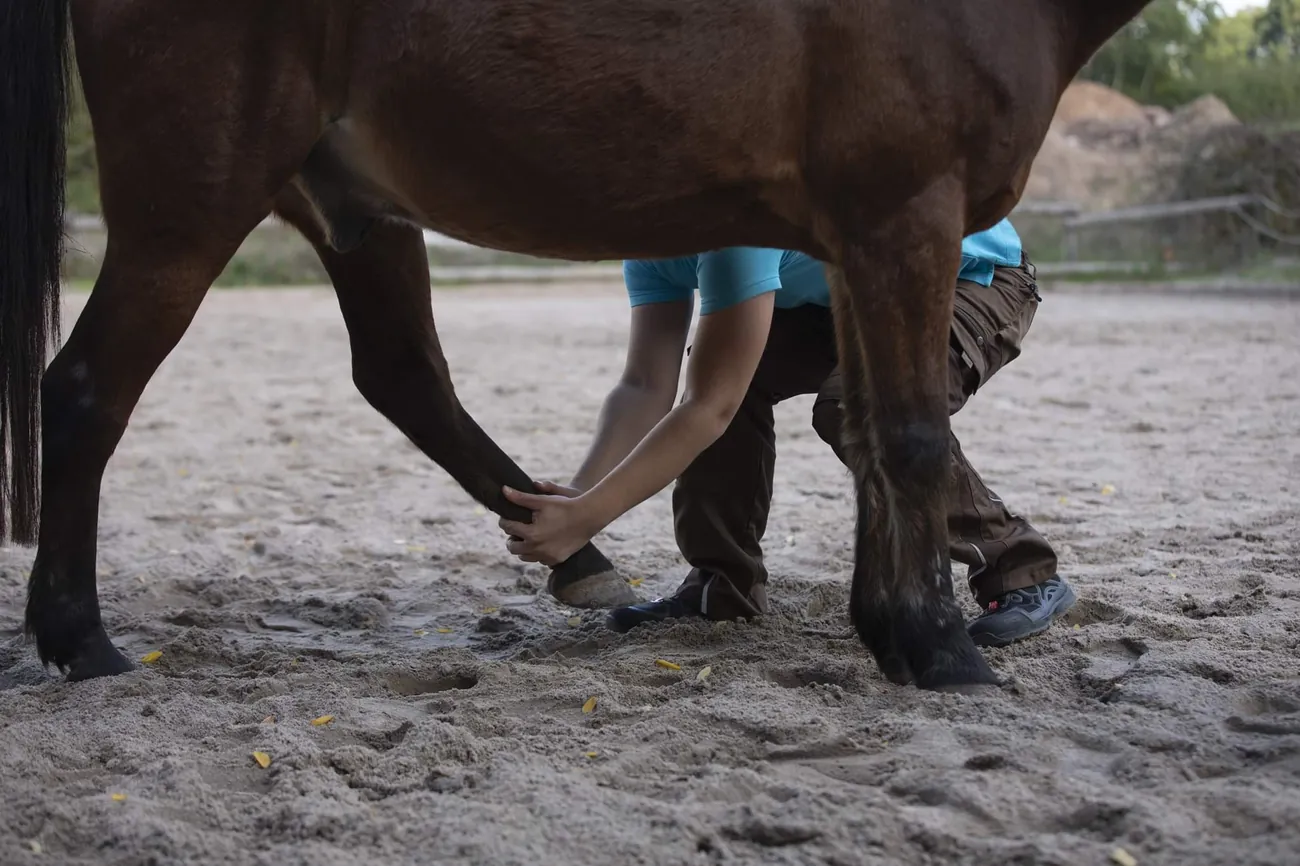
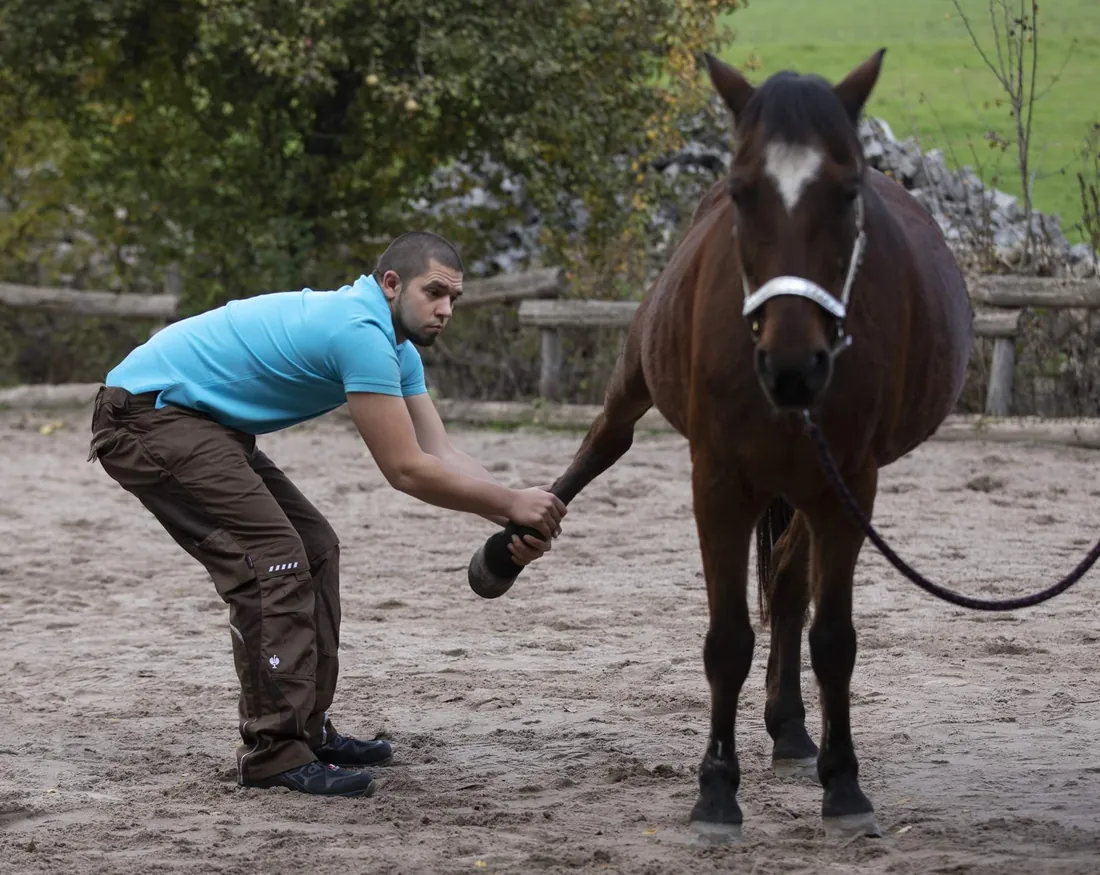
Movement therapy is the active heart of horse physiotherapy: targeted, controlled exercises that build muscle, make the back able to carry and train coordination, balance and mobility. It complements the manual treatment – so your horse can carry and hold by itself what has been released.
Movement therapy is especially valuable for building muscle after box rest or surgery, for a weak or tense back, for rideability and rhythm problems, in rehab after injuries – and to keep older horses supple and sport horses sound. I tailor every exercise individually to your horse’s diagnosis, age and level of training.
Common questions & doubts – answered honestly
„Does my horse really need this?“ Here are the key points.
Is horse physiotherapy scientifically sound or just wellness?
It's based on the same physiotherapeutic principles as for humans. It's about concrete goals: releasing tension, improving mobility and muscle balance, reducing pain. In competitive sport, physiotherapy for athletes has long been standard – for the sport and leisure horse it makes just as much sense.
My horse isn't lame – is it still worth it?
Often yes. Many problems don't show as lameness but „under saddle“: stiffness, rhythm faults, resistance, girth/saddle sensitivity. Behind them there are frequently tension or blockages. A regular check helps spot such issues early and prevent secondary damage.
Does it replace the vet or the saddle fitter?
No. With lameness or acute problems your horse belongs to the vet first. I work as a complement – in harmony with vet, farrier, saddle fitter and dental care, so the measures work together rather than against each other.
Do I need a referral from my vet?
A referral isn't strictly required. Veterinary clarification is important, however, if there is lameness or an acute problem – then I work on the basis of the diagnosis.
Is the treatment stressful for the horse?
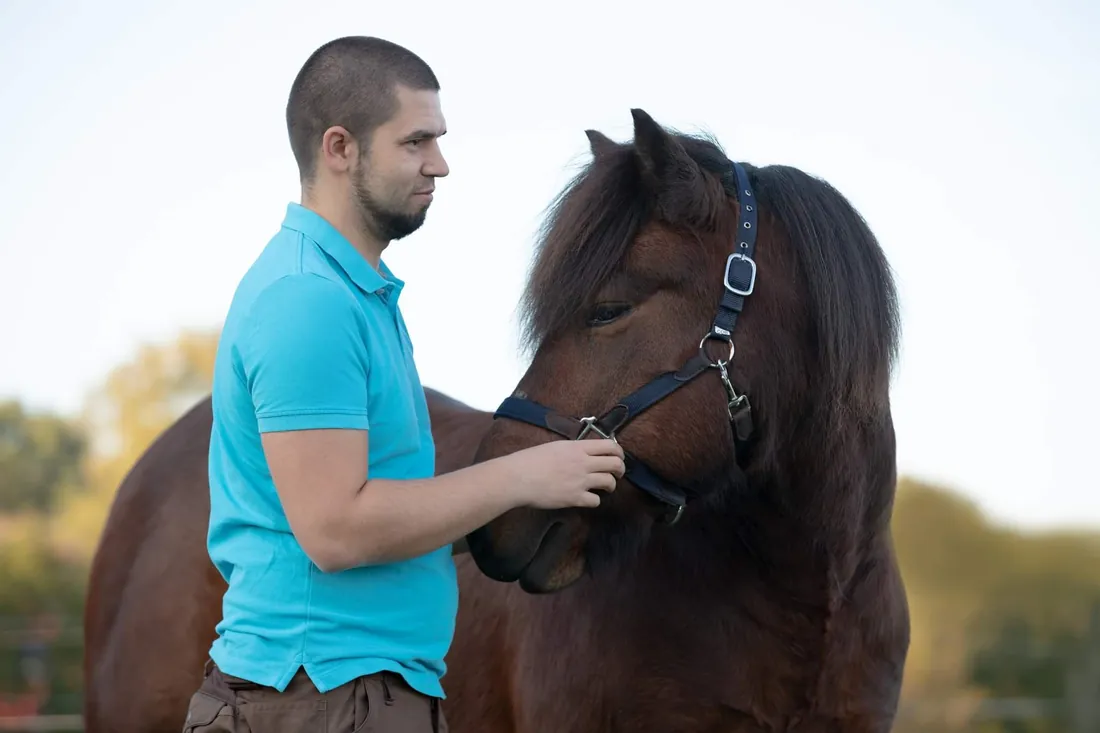
No – the techniques are gentle, and I come to your yard, into familiar surroundings. Many horses visibly enjoy the treatment and become calmer and more relaxed.
What does it cost and how often is it needed?
It depends on the effort, the findings and the travel distance, as well as your goal – from a one-off solution to a concrete problem to regular support in training. After the first thorough assessment I'll discuss the cost transparently and a realistic plan.
What I can do for your horse
Double-qualified, mobile at your yard and always tailored to your horse.
Double-qualified
Trained human physiotherapist and animal physiotherapist specialising in horses and dogs – expertise from both worlds.
I come to your yard
Mobile practice: treatment right at your horse in familiar surroundings. English-speaking. Service area around Ottweiler (Saarland & western Palatinate).
Individual treatment plan
After a thorough assessment I build a plan that fits your horse's age, level of training and goals.
Holistic & in a team
I treat causes rather than just symptoms – coordinated with vet, farrier and saddle fitter.
I work mobile around Ottweiler – in the Saarland (incl. Neunkirchen, St. Wendel, Illingen, Namborn, Bexbach, Marpingen, Tholey, Homburg, Saarbrücken) and the adjacent western Palatinate / KMC area (Kusel, Baumholder, Birkenfeld, Waldmohr, Ramstein, Landstuhl, Zweibrücken). Core area approx. 30 km around Ottweiler – longer distances gladly on request.

Do you also have a dog?
I offer mobile physiotherapy for dogs too – from arthritis to post-op rehab.
Ready for a happier-moving horse?
Book an appointment – available online around the clock or directly via WhatsApp. I come to your yard.